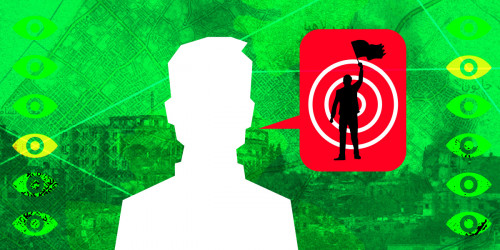


SAN FRANCISCO – The Electronic Frontier Foundation (EFF) sued the Department of Homeland Security (DHS) and Immigration and Customs Enforcement (ICE) today demanding public records about their use of administrative subpoenas to try to identify their online critics.
Court records and news reports show that in the past year, DHS has used administrative subpoenas to unmask or locate people who have documented ICE's activities in their community, criticized the government, or attended protests. The subpoenas are sent to technology companies to demand information about internet users who are often engaged in protected First Amendment activity.
These subpoenas are dangerous because they don’t require judges’ approval. But they are also unlawful, and the government knows it. When a few users challenged them in court with the help of American Civil Liberties Union affiliates in Northern California and Pennsylvania, DHS withdrew them rather than waiting for a decision.
DHS and ICE have ignored EFF’s public-records requests for documents about the processes behind these subpoenas, so EFF sued Wednesday in the U.S. District Court for the District of Columbia.
“DHS and ICE should not be able to first claim that they have the legal authority to unmask critics and then run from court when users challenge these administrative subpoenas,” said EFF Deputy Legal Director Aaron Mackey. “The public deserves to know what laws the agencies believe give them the power to issue these speech-chilling subpoenas.”
An administrative subpoena cannot be used to obtain the content of communications, but they have been used to try and obtain some basic subscriber information like name, address, IP address, length of service, and session times. If a technology company refuses to comply, an agency’s only recourse is to drop it or go to court and try to convince a judge that the request is lawful.
EFF and the ACLU of Northern California in February wrote to Amazon, Apple, Discord, Google, Meta, Microsoft, Reddit, SNAP, TikTok, and X to ask that they insist on court intervention and an order before complying with a DHS subpoena; give users as much notice as possible when they are the target of a subpoena, so the users can seek help; and resist gag orders that would prevent the companies from notifying users who are targets of subpoenas.
And EFF last week asked California’s and New York’s attorneys general to investigate Google for deceptive trade practices for breaking its promise to notify users before handing their data to law enforcement, citing the case of a doctoral student who was targeted with an ICE subpoena after briefly attending a pro-Palestine protest.
EFF in early March filed public-records requests with DHS and ICE for their policies, procedures, guidelines, directives, memos, and legal analyses supporting such use of administrative subpoenas. EFF also requested all Inspector General or oversight records, all approval and issuance procedures for the subpoenas, all records reflecting how many such subpoenas have been issued, all communications with technology companies concerning these demands, all communications regarding specific named targets or programs, and all communications with the Department of Justice regarding such subpoenas.
DHS and ICE have not responded, even though EFF requested expedited processing of its requests, which requires agencies to get back to requesters within 10 days.
“The policies, directives, and authorization records governing the program have not been disclosed,” the complaint notes. “The legal basis asserted by DHS and ICE for using a customs statute to compel disclosure of information about persons engaged in constitutionally protected speech and association has not been made public.”
For the complaint: https://www.eff.org/document/eff-v-dhs-ice-administrative-subpoenas-complaint
For EFF’s letter urging tech companies to protect users: https://www.eff.org/deeplinks/2026/02/open-letter-tech-companies-protect-your-users-lawless-dhs-subpoenas
For EFF’s letter urging state probes of Google: https://www.eff.org/press/releases/eff-state-ags-investigate-googles-broken-promise-users-targeted-government